
In this guide
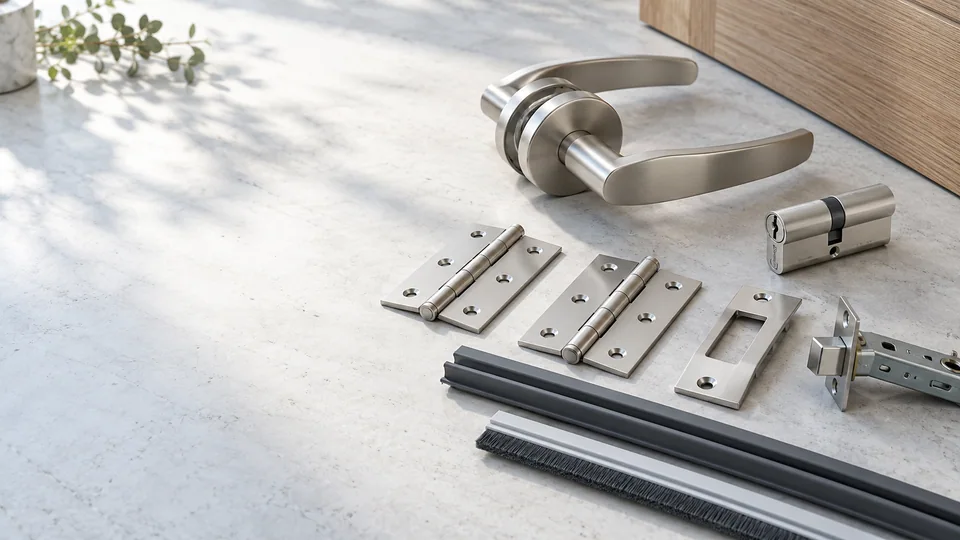
Ask for an itemized hardware set with model, quantity, finish, preparation and supply responsibility. Hinges or pivots, locks, cylinders, handles, seals and operating accessories should not disappear inside a single undefined hardware line.
Begin with the door collections so each opening is assigned to the correct system. A hinged entry, pivot door, interior set and garage door do not share the same hardware schedule.
Which hardware belongs in each door-system quote?
List hardware against the opening system and its operating requirements. A hinged entry, pivot leaf, interior door and sectional garage door need different component schedules; confirm compatibility and supply responsibility for the complete set before comparing totals.
| Door system | Components to identify in the proposal |
|---|---|
| Pivot entrance | Pivot hardware, lock, handle, threshold and seals |
| Hinged entrance | Hinges, lock, handles, threshold and seals |
| Iron or steel entry | Operating hardware, meeting details and any opening-glass hardware |
| Interior door | Hinges or sliding hardware, latch or lock, handles and specified seals |
| Garage door | Tracks, rollers, hinges, counterbalance, seals and operator scope |
This is a procurement prompt, not a universal bill of materials. The selected system’s documentation should identify the exact components and quantities needed for the assembly being offered.
Give every line a clear supply status
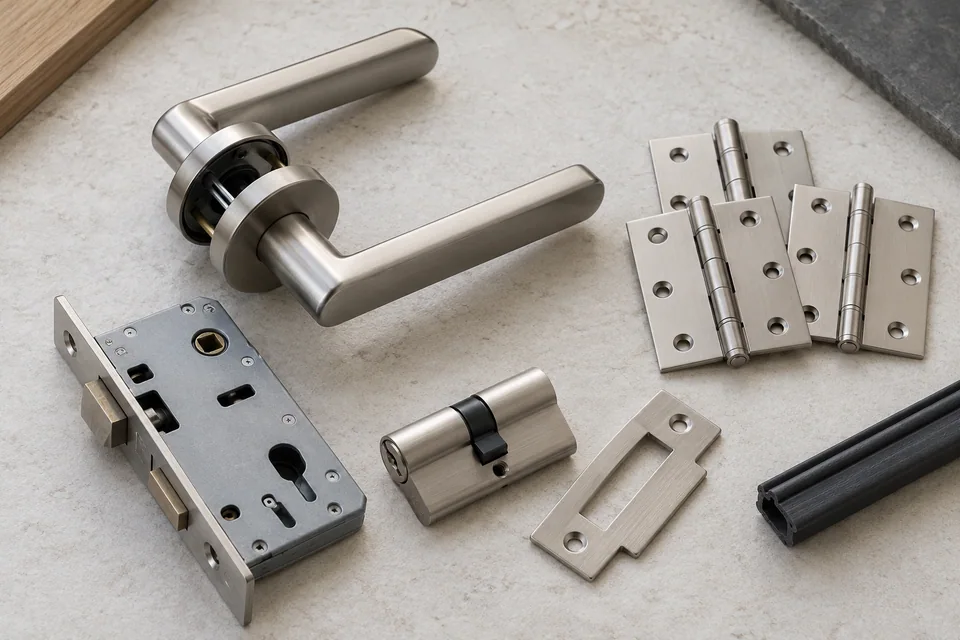
For an included item, record its identity and quantity. For an optional item, show its effect on the proposal and any related preparation. For an excluded item, name the party responsible for supplying it and establish how compatibility will be checked.
Avoid leaving a component marked “by others” without an owner. If a local supplier provides a lock or operator, exchange the relevant technical information before manufacturing or installation. Record the accepted interface in the drawing or component schedule rather than only in an informal message.
Check preparation as well as the hardware itself
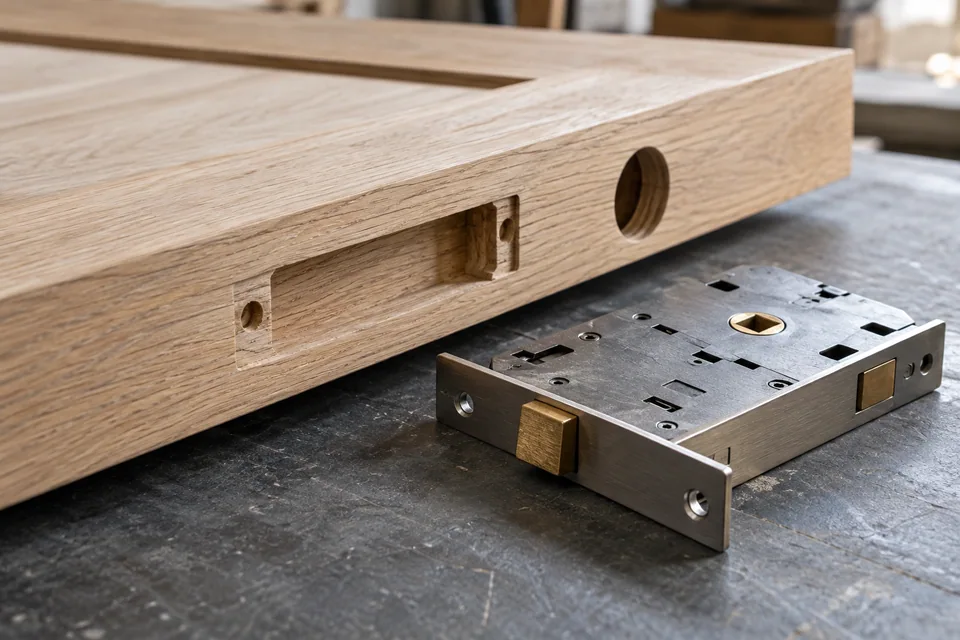
A quotation may include hardware preparation without supplying the hardware, or supply a component that still requires site work. Clarify which situation applies. For locks, identify the required function, handing and preparation. For handles, confirm the intended mounting arrangement and any associated accessories.
The iron and steel distributor guide helps organize entry-door configurations. For garage doors, use the dealer and installer supply guide to connect tracks, counterbalance and operator choices to the proposed complete door. No component should be assumed compatible solely because its description sounds familiar.
Connect hardware to project requirements
Provide the intended use, destination and any requirements set by the project team. For powered components, identify who confirms electrical compatibility and the required accessories. Where evidence is required, request documents that cover the proposed combination and intended application.
The quality and project requirements guide helps track these questions. Do not infer door-set performance or certification from a hardware brand name. Keep product instructions available to the qualified installation team, especially for counterbalance and powered systems.
How should electrical and mechanical responsibilities be split?
For a door with access control, distinguish the mechanical lock, powered component, controller, power supply and site wiring. Ask who confirms the interface and who supplies and commissions each part. A prepared cable route is not the same as a complete operational access system.
Use the SDI door and hardware schedule as an example of tying hardware records to openings. The custom system’s own dimensions and preparation requirements remain controlling.
Before approval, reconcile every line as included, optional, by others or excluded. A by-others item still needs an identified supplier and compatibility review. Carry the accepted hardware-set reference into the drawing and packing list. When a model changes, confirm whether the machining, handing, finish or supporting documents need revision before accepting the substitution.
Keep the final schedule useful after delivery
Before approval, reconcile the hardware list with the accepted drawings and final quote. Confirm packing labels, spare-part scope and the information needed to request replacements. If a substitution is proposed, record its approval and update the documents used by the receiving and installation teams.
When you request a custom door quote, include the hardware you already intend to source and the items you expect within the door package. This turns a vague completeness claim into a usable responsibility record. The same schedule can then support quote comparison, receiving checks, installation coordination and later service without reconstructing the order from memory.
Before you specify
Questions worth asking
Are fixing screws and installation accessories always included?
No. List them explicitly and confirm whether they suit the actual supporting construction. Some fixings may need to be selected and supplied by the local installer.
Sources & further reading
About this guide
A practical starting point.
Use this guide to prepare your project brief and compare proposals. Construction details and installation requirements must be checked against the selected system and its approved documents.