
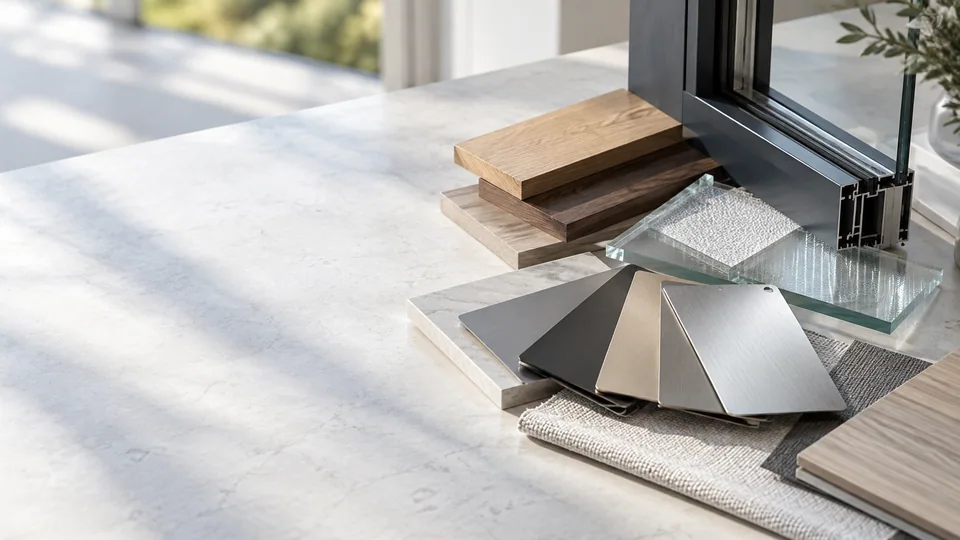
A sample is most useful when it answers a specific decision. It may help compare color, texture, veneer variation, a profile detail or a construction interface. State what you need to evaluate before requesting a sample so the discussion focuses on an appropriate item rather than an undefined “sample door.”
Choose the question the sample should answer
| Your decision | Sample or review material to discuss |
|---|---|
| Color and surface texture | Representative finish sample with an identified reference |
| Natural wood appearance | Veneer or timber selection showing relevant variation |
| Frame and leaf relationship | Section, detail sample or drawing appropriate to the proposed system |
| Glass appearance | Relevant glass sample and an explanation of its intended use |
| Full assembly operation | Availability and scope of a larger demonstration or trial configuration |
Availability, size, charges and transport arrangements need confirmation. The website does not promise free samples or a complete sample door for every collection.
Provide the project context
Identify the product family, intended application, destination country and approximate order scope. Include finish references and photographs of surrounding materials where coordination matters. Explain whether the priority is color matching, touch, visual proportion, construction or another question.
For entrance and garage coordination, request a review of the relevant surfaces together. Different substrates, textures and profiles can show the same color reference differently.
Understand the sample’s limits
A small surface sample does not establish the performance of a complete door. It also may not show the full effect of a repeating grain pattern, large panel divisions or the appearance of edges and joints. Pair samples with the relevant elevation or construction drawing.
Natural materials and production batches may vary. Agree what the approved sample represents and what variation is acceptable. Where a sample is only an early design reference, keep that status clear rather than treating it as final production approval.
Record approval and the next step
Retain the sample reference, date, agreed appearance and the component or door type to which it applies. Carry that reference into the quotation and drawing approval. If a finish or construction changes, review whether the existing sample still represents the proposed order.
Send the sample question through Request a Quote or contact [email protected]. The finish library and wood species guide can help you prepare the brief. Confirm the approved sample arrangement in writing before assuming its cost, timing or use in the final supply package.