

In this guide
State whether the target means factory completion, dispatch, arrival at a port, site delivery or readiness for installation. A lead-time promise is ambiguous until the starting conditions and destination milestone are defined.
Start with the door collections and define the systems required. A project containing several door types may need separate technical decisions even when the purchase order is coordinated as one package.
Which delivery milestone should the schedule use?
Clarify whether the target date means production complete, shipment, arrival at a named delivery point or ready for installation. These are different milestones. State which one matters to the construction schedule and ask the supplier to describe its quoted timing against that milestone.
Identify the site conditions required before installation, including completed openings, access and storage. A door arriving before these conditions are ready may still leave the installation date unresolved. Keep the receiving and installation responsibilities visible in the schedule.

Build an approval sequence
| Stage | Information needed to proceed | Suggested responsible role |
|---|---|---|
| Initial brief | Opening schedule, system preferences and destination | Buyer or project coordinator |
| Technical proposal | Dimensions, interfaces and requirements | Supplier and project design team |
| Samples | Selected material and finish references | Design approver |
| Shop drawings | Coordinated details and accepted revision | Authorized project approver |
| Production release | Agreed scope and commercial release conditions | Buyer and supplier |
| Shipping preparation | Packing, delivery instructions and documents | Supplier and logistics coordinator |
| Site handover | Access, receiving arrangements and readiness | Contractor or installer |
Adapt the roles to the project. The important point is to give each decision an owner and an agreed response path.
Allow time for meaningful reviews
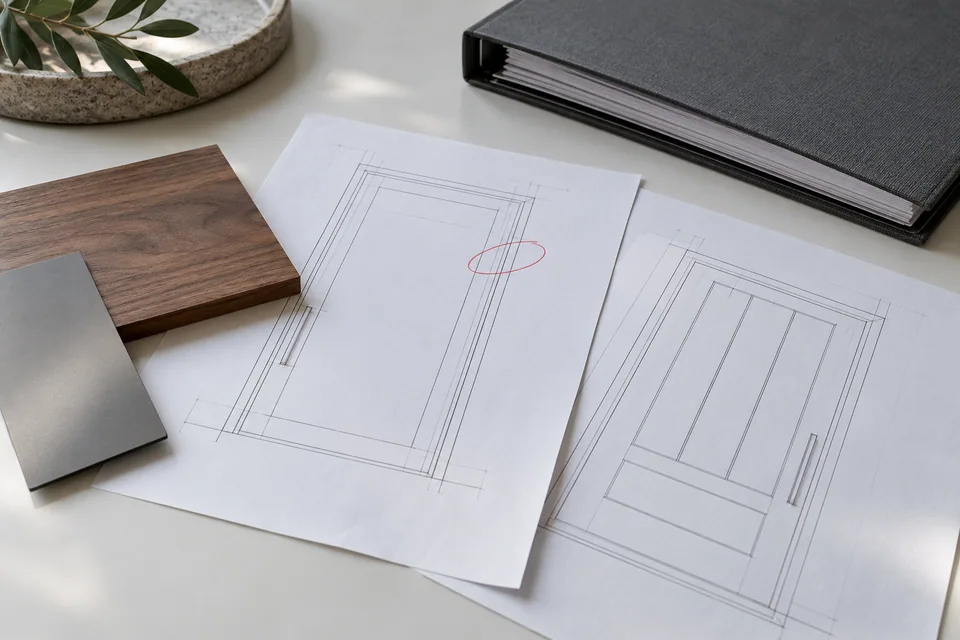
The customization process guide helps organize the move from reference images to a defined order. Send consolidated feedback on drawings and samples, with the relevant revision clearly identified. Separate essential changes from optional preferences so the supplier can explain their consequences.
For repeated openings, approve the representative detail before applying it across the schedule. Check that the remaining openings actually share the relevant dimensions and construction. A fast approval of an ambiguous drawing can create a longer correction cycle later.
Manage changes as schedule events
Record changes to dimensions, finish, glazing, hardware or quantity after quotation. Ask which documents must be revised and whether the change affects the agreed schedule. Do not assume a small visual change is independent of material availability or production preparation.
Use a simple register showing the change, decision owner, date requested, accepted revision and updated milestone. The quality and project requirements guide can help identify evidence that must be resolved before release. Unanswered performance questions belong in the schedule, not in an informal promise to deal with them later.
Which approvals can move the critical path?
Build the plan around decisions rather than one production-duration number. Put site measurement, drawing approval, finish approval, hardware confirmation and commercial release on separate lines. Give each an owner and record what information it depends on.
The SDI schedule examples show why door, frame and hardware records need coordination. For a custom order, the planning consequence is that a late hardware decision can reopen preparation details even if the visual design is unchanged. This is an editorial planning inference, not a published delivery promise.
Work backward from the required site milestone using durations confirmed for the actual order. Keep any buyer contingency separate from the supplier’s confirmed period. When a change occurs, ask which milestones move and whether the quote or drawing revision changes with them. Update the written plan before booking dependent installation work.
Confirm the current schedule before committing site work
Request the order-specific schedule after scope and release conditions are agreed. Keep shipping, transit and installation coordination as separate lines, with assumptions stated by the relevant parties. Any proposed completion date should be confirmed against the current order rather than copied from a previous project.
When you request a custom door quote, provide the desired milestone and known construction constraints. Update the schedule when approvals or site conditions change. This creates a practical timeline with visible dependencies and accountable decisions, while avoiding an unsupported promise that every custom door can be supplied within the same period.
Before you specify
Questions worth asking
Does approving a drawing automatically start production?
Only if the agreed release conditions say so. Confirm any remaining sample, hardware, payment or commercial conditions with the supplier.
Sources & further reading
About this guide
A practical starting point.
Use this guide to prepare your project brief and compare proposals. Construction details and installation requirements must be checked against the selected system and its approved documents.