In this guide
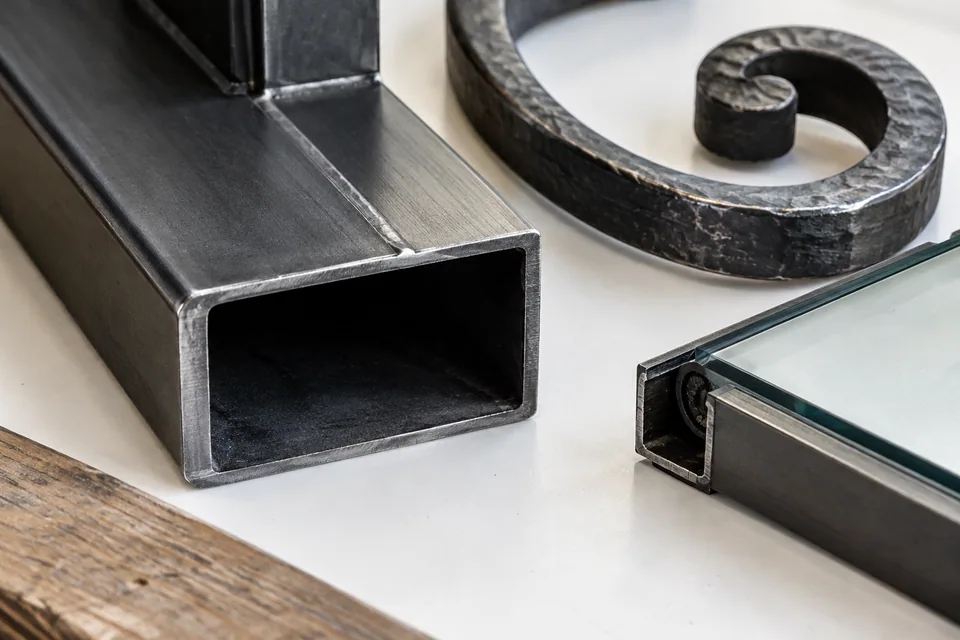
Request the frame, leaf, decorative pieces and protective finish as separate material records. A style name does not identify every alloy, section or fabrication method in the assembly.
For a broad view of the available design directions, begin with the iron and steel door collection. A useful inquiry then narrows the discussion to one opening, one operating arrangement and a clear material schedule.
Does a wrought-iron appearance identify the door construction?
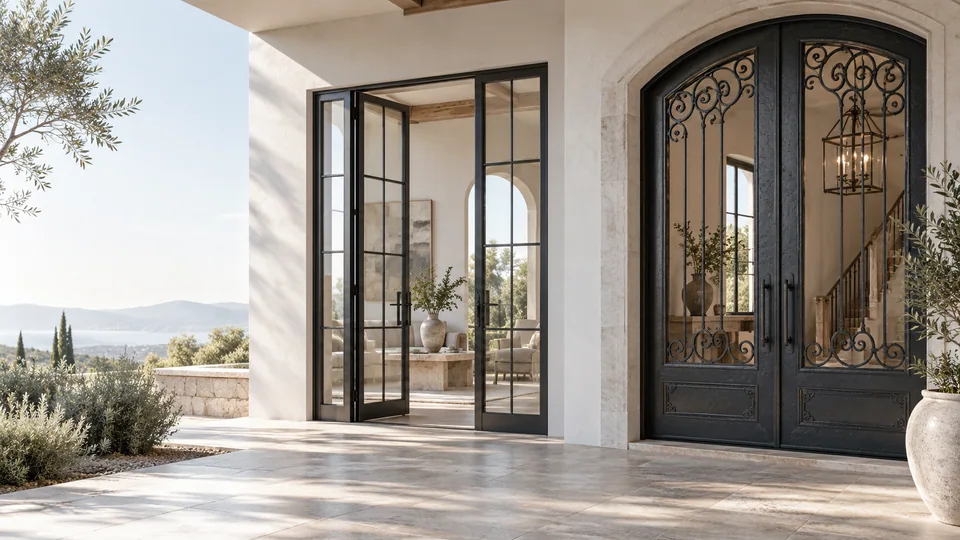
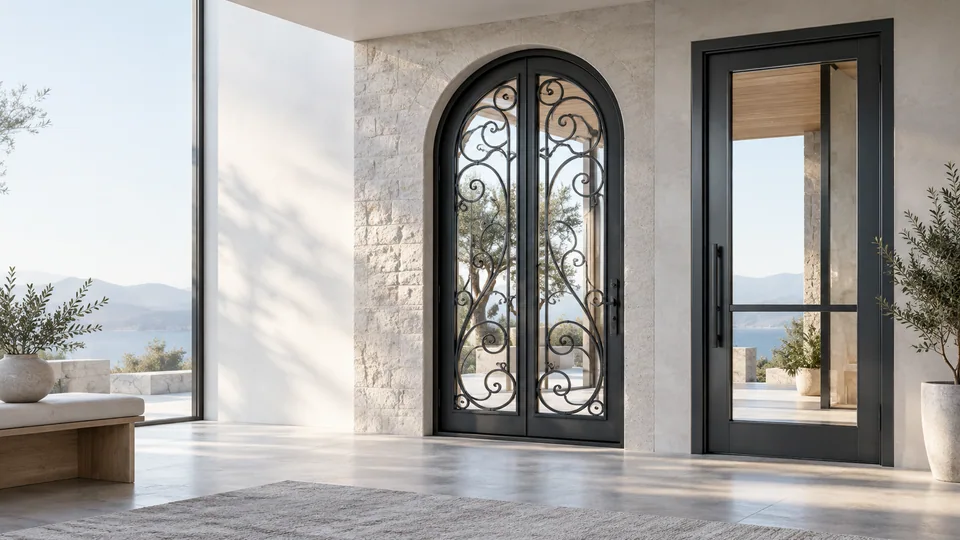
An ornamental entry can combine steel profiles, sheet material, decorative castings or forged elements. A contemporary steel door may have a simpler glazed grid. Neither appearance tells you the profile section, wall thickness, reinforcement or hinge arrangement.
Ask for a labeled section through the frame and leaf. The supplier should identify which parts form the structural frame, which are decorative and which hold the glazing. If a description says “solid,” request clarification about the component being described; it should not be interpreted as a claim about the entire assembly.
Compare the complete assemblies
Use the same opening and use case when comparing quotes. A double entry with sidelights and an opening glass panel is a different scope from a single fixed-glazed leaf, even when the elevation looks similar.
| Comparison item | Information to request | Why it matters to procurement |
|---|---|---|
| Main material | Component list and profile sections | Establishes what is being supplied |
| Decorative work | Approved pattern and attachment detail | Defines appearance and fabrication scope |
| Glass | Composition, appearance and opening arrangement | Separates the glazing order from the pattern |
| Hardware | Hinges, locks, handles and included quantities | Makes competing quotes comparable |
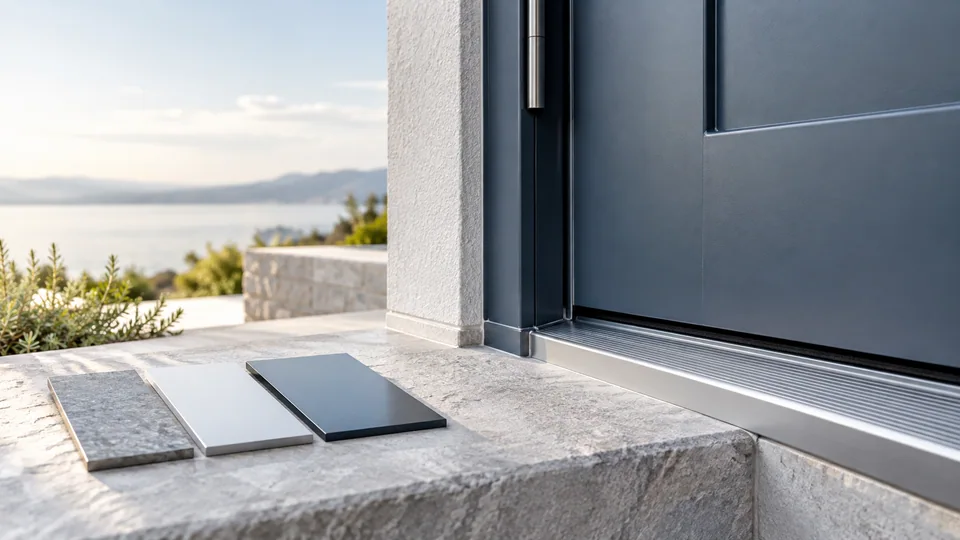
| Finish | Preparation and coating schedule | Connects the finish to the project environment |
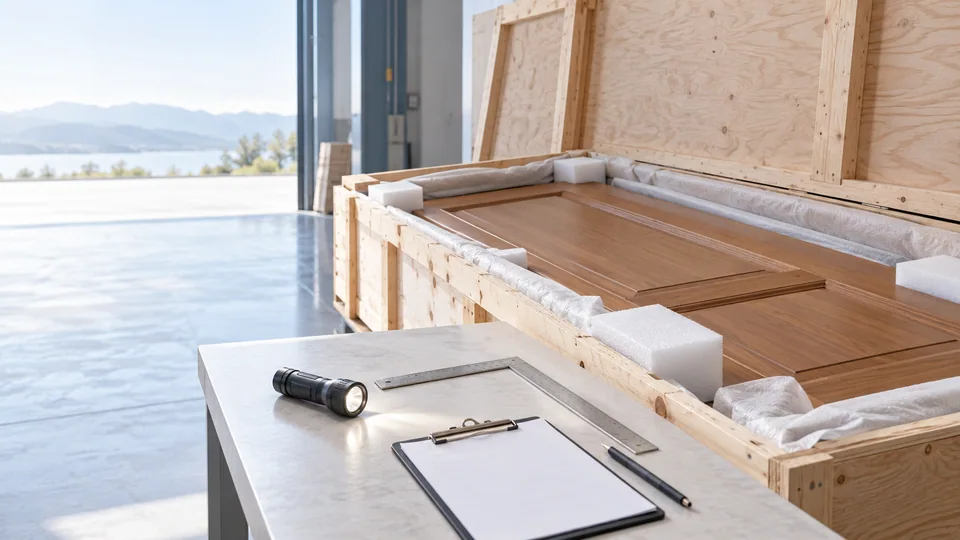
| Delivery | Packed weight, dimensions and crate count | Supports handling and transport planning |
Match the system to the location
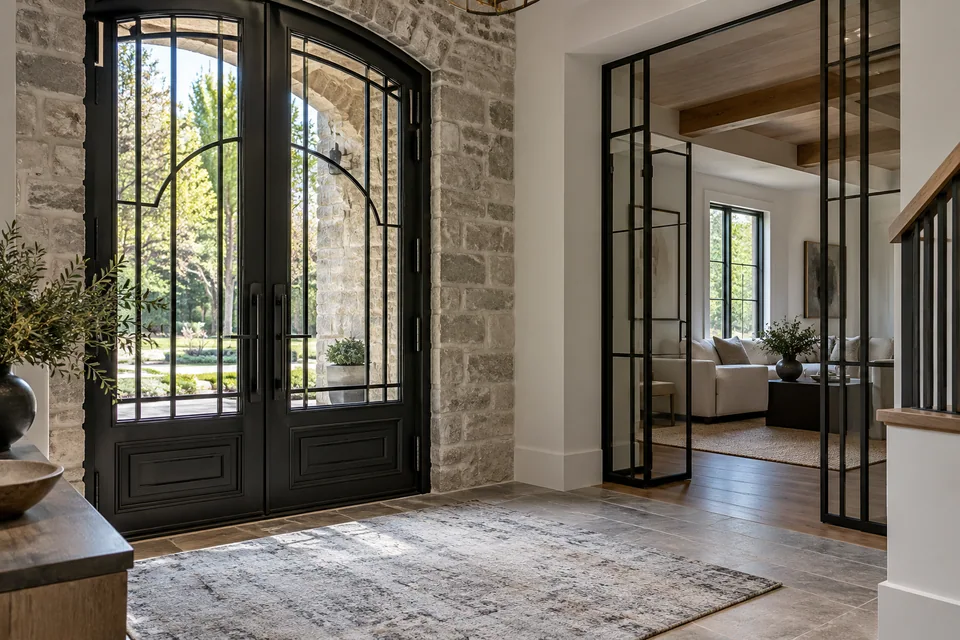
Record whether the door is an exterior entrance or an internal divider. For an exterior opening, describe exposure, threshold conditions and the project requirements supplied by the designer. For an interior opening, identify wall finishes, floor transitions and the desired glass privacy.
A material name does not establish fire, security, acoustic or weather performance. Where a project has a stated requirement, ask for documentation covering the proposed assembly and configuration. The quality and project requirements guide explains the information needed to evaluate that match.
Treat corrosion protection as a specification
“Black finish” is a color description, not a complete protective system. Request the proposed surface preparation, coating products, treatment of joints and a maintenance document. Ask how visible damage found during unpacking or installation should be recorded and assessed.
For exposed locations, give the supplier the site conditions before accepting a finish recommendation. Discuss which areas can be accessed for cleaning and how replacement hardware would be identified. Our steel door corrosion planning guide develops those questions without promising a universal finish lifespan.
Read the material schedule before comparing durability
Separate the visible ornament from the structural frame and the glass-retaining parts. Ask for section drawings and a component description for each. If a supplier says galvanized, identify which components receive that treatment and how subsequent fabrication is addressed.
SDI 112 explains zinc-coated steel sheet used in doors and frames. Its scope is not proof that decorative bar work, welds or all components of an ornamental entrance have the same protection. Avoid transferring a standard steel-door statement to a differently fabricated assembly.
Compare the resulting specification against the location: an interior glazed partition and a coastal entrance require different evidence and maintenance planning. A useful decision record names the selected assembly, unresolved evidence and the reason for choosing it. It should remain intelligible if the marketing name changes on a future reorder.
Build a comparable inquiry
Submit an elevation, opening dimensions, handing diagram, quantity and delivery destination. Add a preference for decorative iron styling or a restrained steel appearance, then request the proposed construction beneath that style. Identify the frame, threshold, glazing and hardware as included, optional or excluded.
Distributors can use the iron and steel supply planning page to organize a trial order around repeatable configurations. Keep the approved drawing, finish reference and component list together so that a later reorder describes the same door rather than relying on a photograph or a broad product name.
Before you specify
Questions worth asking
Does more decorative metal establish a higher security rating?
No. A security claim must apply to a tested or assessed complete assembly, including glazing, locks, frame and fixing conditions. Appearance or weight is not a rating.
Sources & further reading
About this guide
A practical starting point.
Use this guide to prepare your project brief and compare proposals. Construction details and installation requirements must be checked against the selected system and its approved documents.