

In this guide
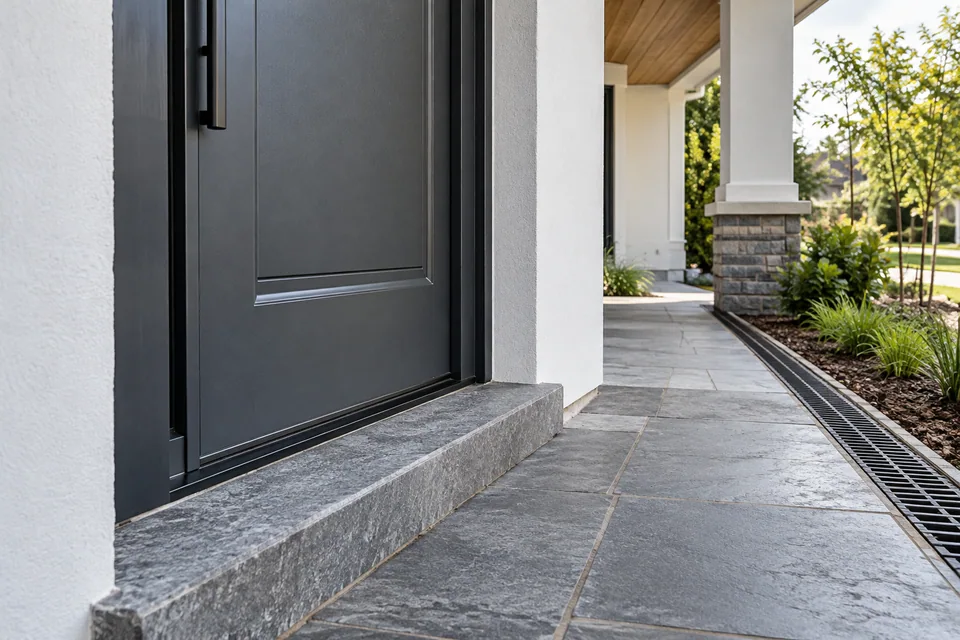
Provide the actual installation setting: rain exposure, coastal spray, shelter, cleaning access and contact with nearby materials. The finish proposal needs to respond to that setting, not just to a color preference.
When selecting from iron and steel door systems, provide the exposure information alongside the design reference. This lets the finish discussion happen before drawings and price are finalized.
Which exposure conditions affect the finish brief?
Give the project location and explain whether the entry is sheltered, fully exposed, near the coast or regularly affected by irrigation and cleaning water. Include photographs or elevations showing the canopy, surrounding walls and drainage arrangement. These details are more useful than simply requesting an “outdoor finish.”
Ask the project team to identify any material or performance requirements that apply. A door selected for one setting should not be assumed suitable for every environment. The supplier needs enough information to state the proposed scope and any limitations explicitly.
Request a finish system rather than a color
Ask for a written sequence covering surface preparation, any specified primer or intermediate treatment, and the final coating. Request the product identity and relevant supplier documentation for each stage that forms part of the proposal. Terms such as powder coated or painted do not identify all of these details.
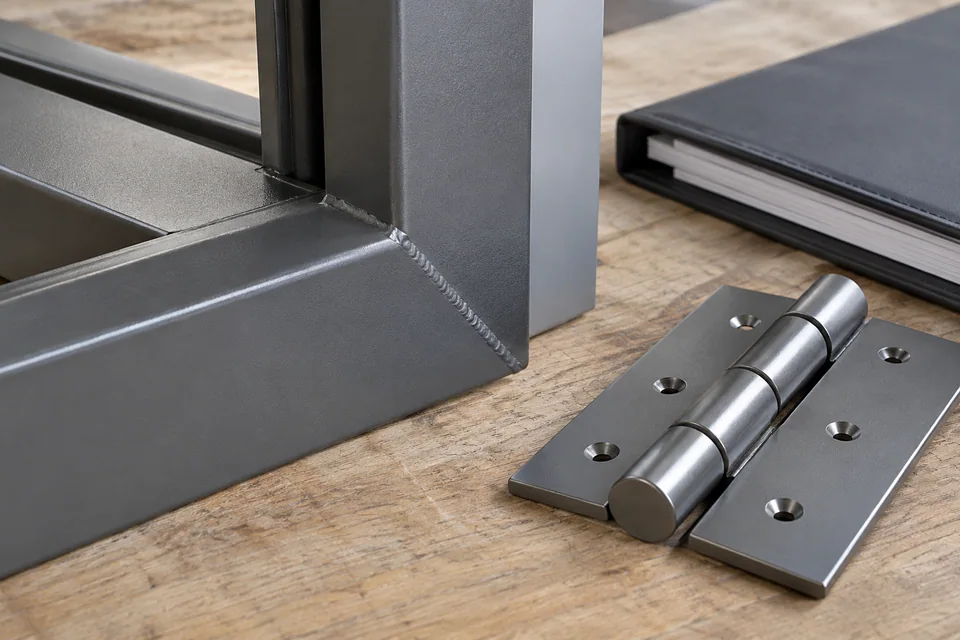
The finish schedule should also address welds, edges, connection areas and parts treated separately. If hardware has a different material or finish, list it separately. A decorative surface sample is useful for color approval, while the underlying process needs its own documentation.
Put the checks into the order record
A clear record helps purchasing, inspection and support work from the same assumptions.
| Order record | Question to resolve before approval |
|---|---|
| Exposure note | Has the supplier reviewed the described location? |
| Preparation | What treatment is specified before the final coating? |
| Coating identity | Which product and application record support the proposal? |
| Joints and edges | How are these areas addressed in the finish schedule? |
| Hardware | Are material and finish identified independently? |
| Care document | What cleaning and inspection instructions apply? |
| Damage procedure | Who assesses an affected area and approves any repair? |
Use the quality and project requirements page to organize the evidence requested with the quotation. Do not replace product-specific documentation with a general statement about steel doors.
Protect the finish through delivery and installation
Agree how the door will be separated from adjacent components in the package and how finished surfaces will be protected during site work. The receiving team should record crate labels, condition and visible damage before parts are moved into storage.
Keep photographs linked to the door number and packing list. If a coated surface is damaged, obtain the supplier’s assessment and written repair guidance before applying an unapproved material. A cosmetic touch-up and a confirmed repair procedure are different decisions; the order record should make responsibility clear.
Where can a corrosion specification become incomplete?
Check the places that disappear after installation: frame backs, concealed fixings, welds, cut edges and the meeting of unlike components. Ask the supplier to mark the coating scope on a drawing and identify any protection or finishing that belongs to site work.
SDI 112 distinguishes zinc-coated steel sheet products; it does not establish the treatment of every fabricated detail in a custom iron or steel entrance. Record the supplied substrate and the full proposed finish sequence instead of reducing both to a single “rustproof” label.
Add a damage-reporting route to the handover. The receiving team should photograph an affected area, identify the order line and protect it from further exposure while seeking the supplier’s instructions. Do not specify a generic abrasive or touch-up product for an unknown coating. Keep cleaning access and the actual written warranty conditions with the finish approval.
Plan care and future support
Request a care document that identifies permitted cleaning methods, inspection points and conditions requiring support. Use that document to agree a realistic maintenance plan with the owner or facilities team. Avoid inventing a universal cleaning interval where the proposed finish and site conditions have not been reviewed.
For repeat orders, retain the finish reference, batch information when provided, hardware codes and approved drawings. The distributor supply guide can help turn these records into a consistent reorder package. State any corrosion warranty only as confirmed in the actual written terms, including its scope, exclusions and required care.
Before you specify
Questions worth asking
Is a primer the final exterior finish?
Do not assume so. Ask whether the supplied coating is a transport/shop primer or a complete exterior system, and identify any required topcoat and the party responsible.
Sources & further reading
About this guide
A practical starting point.
Use this guide to prepare your project brief and compare proposals. Construction details and installation requirements must be checked against the selected system and its approved documents.