In this guide
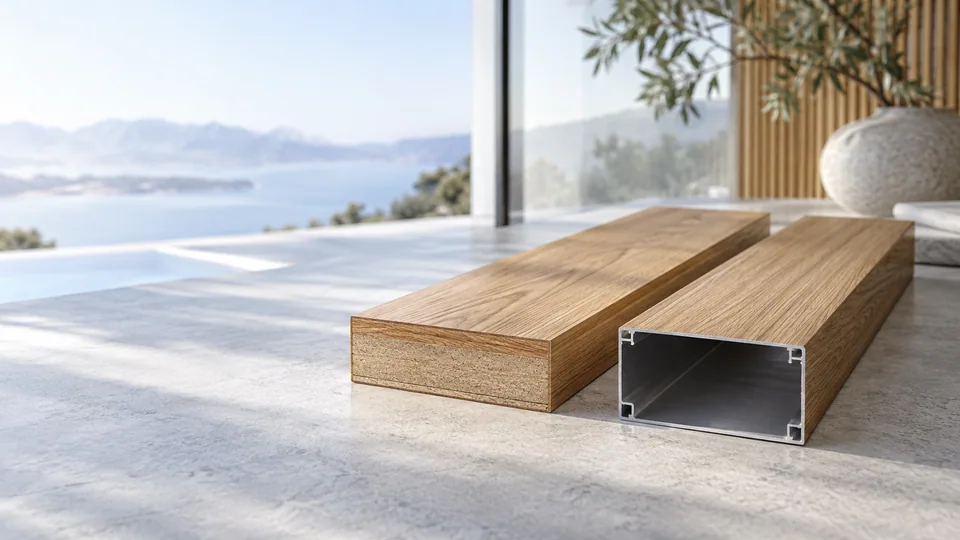
First establish whether the finish belongs to an interior leaf, an exterior panel or a frame. Natural veneer and a wood-look finish on aluminum can achieve related visual effects but describe different substrates and material records.
For interior wood-based options, begin with the wooden door collection. For an entrance using an aluminum assembly, use the exterior door collection. Decide the system and location before selecting the visible grain.
What material information is needed to compare the two finishes?
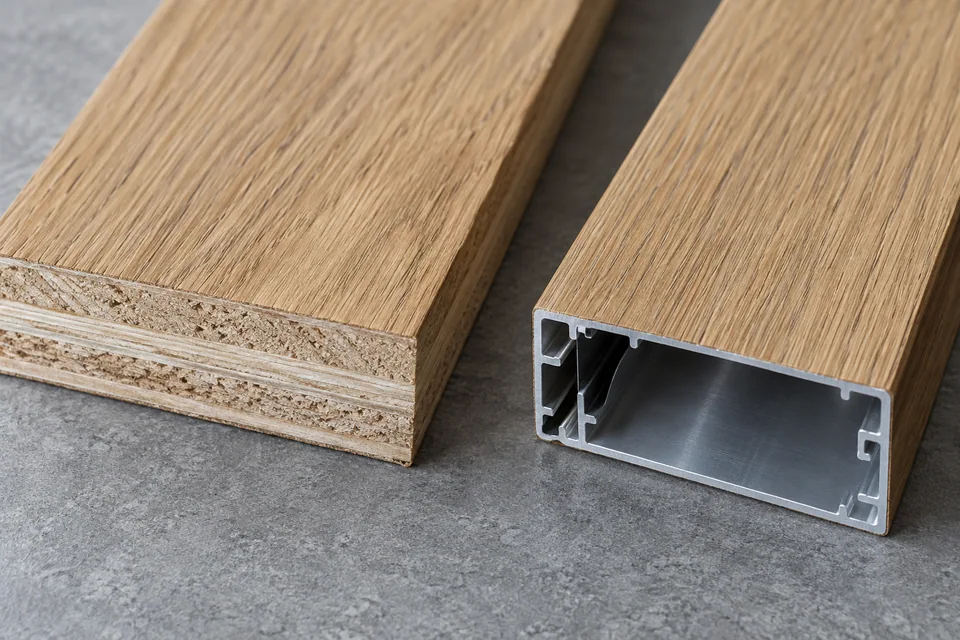
A veneer proposal should identify the veneer, underlying leaf construction and surface treatment. Ask which wood species and grain arrangement are actually offered. A wood-look aluminum proposal should identify the aluminum component and the decorative finish system.
Keep color names separate from material statements. A finish described as walnut-look should not be recorded as a walnut door, and a veneered leaf should not be recorded as solid wood unless that is the documented construction. These distinctions help purchasing compare the correct alternatives.
Compare the selection tasks
| Decision | Natural veneer | Wood-look aluminum |
|---|---|---|
| Visible material | Identify the wood veneer and finish | Identify the decorative grain finish |
| Underlying construction | Identify core, faces and edges | Identify aluminum assembly and other components |
| Grain approval | Agree selection, direction and matching approach | Agree pattern reference and direction |
| Intended location | Review the complete wood-based assembly | Review the complete aluminum assembly |
| Care | Request veneer and finish instructions | Request finish-system instructions |
| Reorder reference | Retain material and sample records | Retain finish and sample records |
Use this comparison to define questions, not to assume one option always costs less or performs better.
Approve the appearance in context
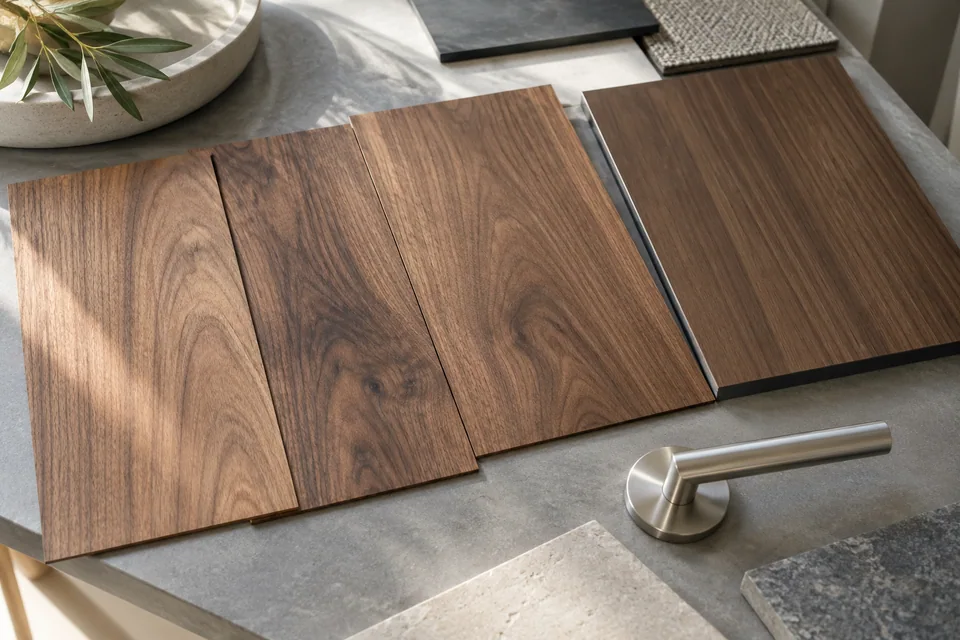
Compare representative finished samples beside adjacent flooring, wall finishes and hardware. View them in the intended lighting and record the selected references. A screen image cannot establish every aspect of color, texture or grain.
For natural veneer, discuss the arrangement across leaves and repeated openings. For wood-look aluminum, discuss the pattern orientation and how it continues across visible panels. Agree acceptable variation through samples and drawings rather than a broad promise of perfect matching.
Coordinate exterior and interior choices
A project can use a wood-look exterior entrance and a natural veneer interior palette without treating them as the same product. Specify the visual relationship you want and review the samples together. The wood-grain aluminum finish guide can help define the exterior finish record.
Ask for product-specific evidence and limitations relevant to each location. Do not transfer an exterior suitability statement from an aluminum system to a veneered interior leaf, or assume a wood appearance establishes thermal, moisture or acoustic performance. The complete assembly remains the basis of that review.
Approve grain across the whole visible group
Lay out samples for adjacent leaves, frames and panels together. Mark grain direction, join positions and which surfaces should read as a set. A small sample can approve color while missing the rhythm of a much larger elevation.
For the wood proposal, record species or veneer identity, substrate and finishing system. AWI’s materials guidance distinguishes wood and panel material selection; it does not imply that a wood-look coating is natural veneer or that either option is suitable for every exposure.
For the aluminum proposal, ask for the finish process and the approved repeat or variation. Keep the physical references with a simple elevation showing their placement. Decide how future replacements will be compared with the original set, especially when multiple door types share the same visual palette.
Keep the specification usable after delivery
Use the material comparison guide to record the substrate, visible surface, edge treatment and care information. Include the approved sample reference in the door schedule and quote. Identify who will inspect the appearance and construction at receipt.
For repeat projects, retain both the material description and the visual approval record. Ask how future availability and proposed substitutions will be checked when a new order is placed. This gives the project team a clear way to coordinate warm wood tones across different systems while preserving the actual material identities and their separate use conditions.
Before you specify
Questions worth asking
Can a wood-look aluminum sample replace the approved veneer sample?
No. Treat it as a new material proposal. Review grain, color, gloss, construction and intended exposure separately before accepting the substitution.
Sources & further reading
About this guide
A practical starting point.
Use this guide to prepare your project brief and compare proposals. Construction details and installation requirements must be checked against the selected system and its approved documents.