
In this guide
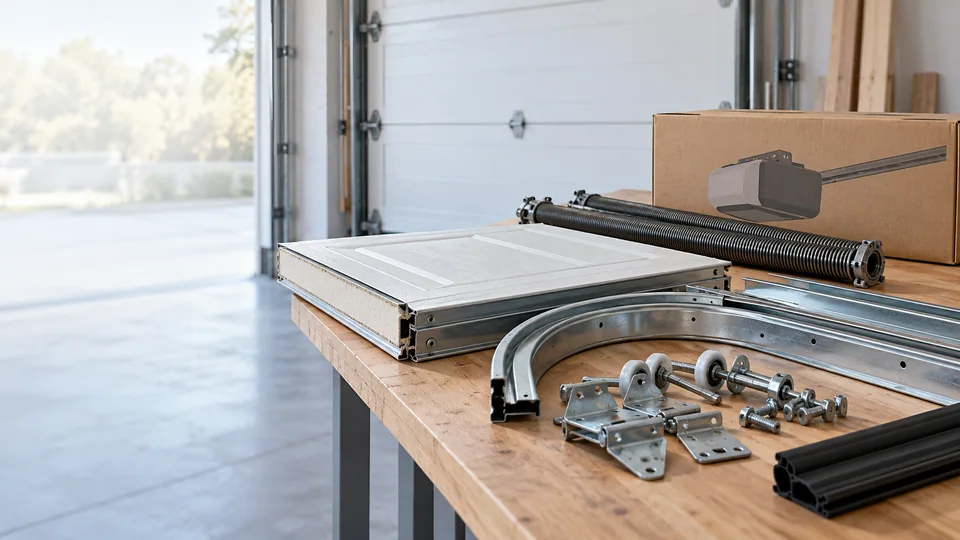
A complete package needs an identified door configuration, matched operating components, an explicit operator scope and documents linked to the order. The word kit is not enough to determine which parts the installer will receive.
Start with the garage door systems collection and the dealer and installer supply guide. Define the intended opening and the installer responsible for reviewing the proposal.
How should component responsibility be recorded?
Use a matrix with three explicit supply states: included, optional and excluded. If an item is supplied locally, name the party responsible and record the compatibility review. Avoid a vague description such as “standard accessories” without an attached list.
| Component group | Information needed in the order |
|---|---|
| Door sections | Arrangement, construction, finish and opening identifier |
| Tracks and supports | Configuration, part list and mounting interfaces |
| Rollers and hinges | Item identities and quantities |
| Counterbalance | Identified system matched to the proposed door |
| Seals and closures | Locations, lengths or part references as specified |
| Operator | Proposed model or clearly stated local supply |
| Safety accessories | Required items and compatibility documentation |
| Spares | Agreed replacement items and identification method |
The supplier’s final bill of materials should use consistent identifiers across drawings, packing lists and support documents.
Confirm the opening and local interfaces
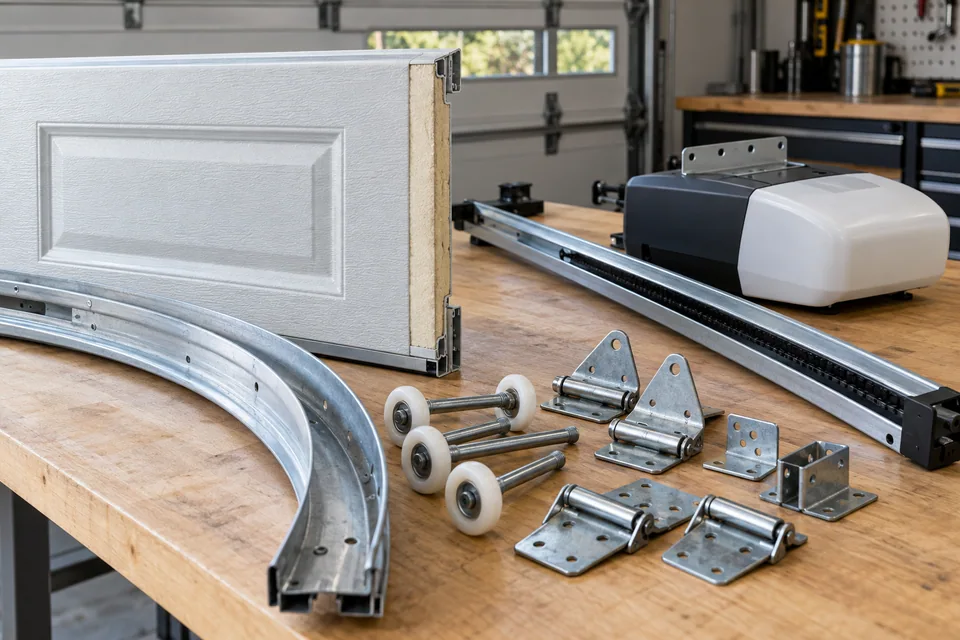
Send the garage door measurement record with width, height, headroom, sideroom and backroom. Include obstructions and supporting construction. The proposed track layout must be reviewed against the measured site rather than selected solely from a catalog image.
For powered operation, provide the destination and local electrical requirements through the responsible installer or project team. Confirm who evaluates operator compatibility, electrical work and required accessories. Do not assume an operator supplied for another market or another door configuration can be transferred without review.
Request documentation for the supplied configuration
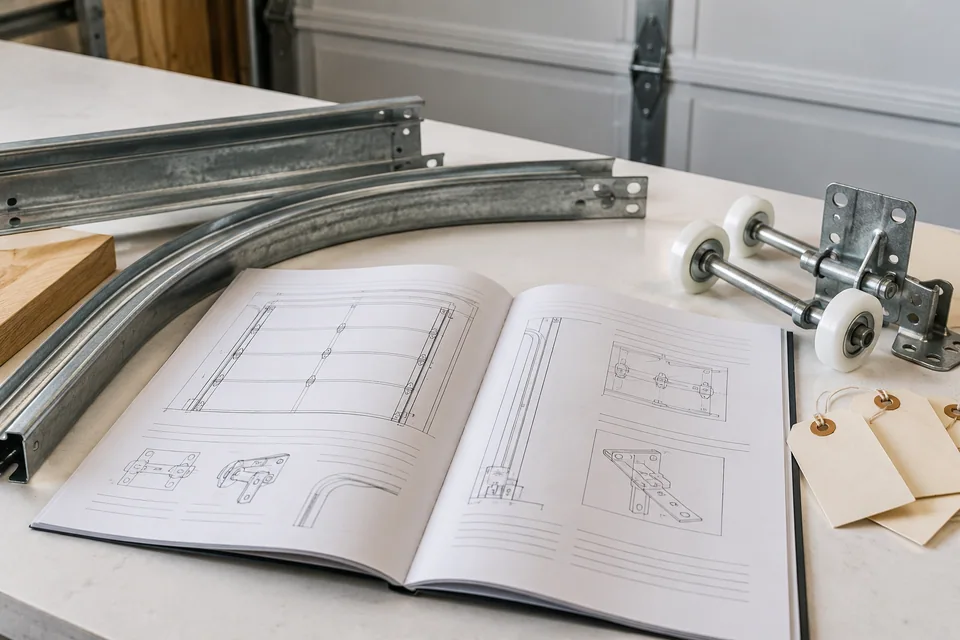
Ask for drawings, the component schedule, installation instructions, operating information and care documentation applicable to the proposed model. Identify the document revision and language needed by the installation team. A manual for a different track or operator arrangement is not an adequate substitute.
Counterbalance and spring systems require capable personnel working from the appropriate instructions. The procurement checklist should ensure those instructions and responsibilities are in place; it should not become an improvised adjustment guide. Agree how technical questions will be escalated before the installation starts.
Connect packing labels to the installation sequence
Ask how panels, long tracks, operators and small hardware are packed and labeled. Components for several openings should be traceable to their door identifiers. Request a packing list that allows the receiving team to check counts without guessing which accessories belong together.
The shipping and packaging guide helps establish the receiving handover. Confirm handling access, storage arrangements and the evidence required if a package is incomplete or visibly damaged. Retain labels and photographs with the delivery record.
How do you handle a proposed component substitution?
Ask for the original part reference, the proposed replacement and the reason for the change before accepting it. Keep the substitution tied to a specific configuration and drawing revision; an alternative approved for one door is not automatically approved for every size in the order.
DASMA TDS 183 addresses component substitution and cautions against judging compatibility by appearance. Seek written confirmation from the system manufacturer for the affected assembly. Do not accept a similar-looking roller or track as equivalent based on a photograph.
Add a substitution status to the packing list: approved, pending or not supplied. When a part is sourced locally, name the party responsible for confirming compatibility and providing instructions. This gives the receiving installer a decision record instead of leaving an unknown part to be resolved during installation.
Make spare parts identifiable from day one
Agree the spare-part scope in the order rather than assuming it is included. Record which parts are specific to a door, which depend on the operator and how replacements should be requested. Ask how any proposed substitution will be reviewed and documented.
After installation, retain the final component schedule and relevant configuration information with the opening record. This gives the dealer, installer and support team a common reference. A well-defined wholesale package is therefore a coordinated set of components, documents and responsibilities, with supply status clear before shipment and support traceability maintained afterward.
Before you specify
Questions worth asking
Can a dealer source the operator separately?
Yes, if the supply agreement allows it and the selected door and operator are confirmed compatible. Record who supplies safety accessories, power work, instructions and commissioning.
Sources & further reading
About this guide
A practical starting point.
Use this guide to prepare your project brief and compare proposals. Construction details and installation requirements must be checked against the selected system and its approved documents.